<-- Back to Water Treatment Supplier

Well Water Disinfection & Shock Chlorination in Palm Coast: Do You Even Need It?

Quick Summary: Worried about what's coming out of your well after a storm, a flood, or a long vacancy? Ionex Water helps Palm Coast homeowners find out whether their well actually needs shock chlorination or whether a filter is the real fix. We test first, treat only what the lab confirms, protect your softener and filters during the process, and retest afterward so you know your water is safe to drink. No guesswork and no unnecessary equipment, just clean, safe water for your family.

Lifetime Warranty

We offer a Lifetime Guarantee on many of our products.

Financing Available

We offer creative financing options for larger purchases.

Fast Installation & Repairs

Don't deal with bad water any longer than necessary.

Satisfaction Guaranteed

You don't pay until you're 100% happy with our services :)
Google Review by Michelle

"This Water System has changed our home in so many ways. We had the worst hard water. We experienced rotten egg smells, rings in toilets, facets turning brown & water stains on dishes from dishwasher. All areas mentioned have improved drastically. CLEAN WATER!!! We appreciate everything Darren has done for our family's water issues. He was very professional & knowledgeable of the products. I highly recommend this company."

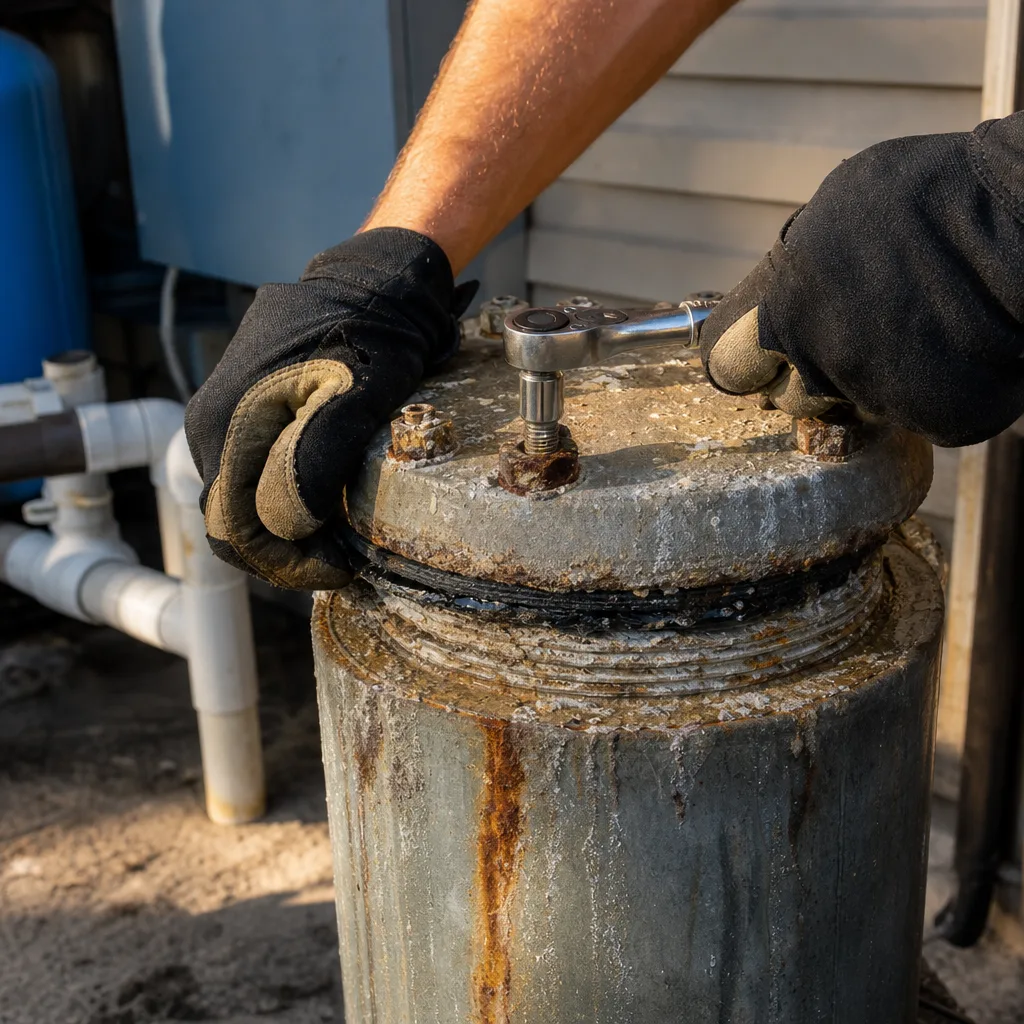
Hands removing corroded well cap before shock chlorination in Palm Coast

Do You Have a Well or City Water? Start Here

Shock chlorination is a well treatment, not a plumbing treatment. If your home is on City of Palm Coast water, that water already gets disinfected before it reaches your meter, so shocking your pipes won't fix a taste or odor problem. If you're on a private well, nobody treats that water but you.

First question I ask on the phone. Well or city?

It changes everything about what happens next. City water in Palm Coast gets disinfected at the plant before it ever reaches your house. If your tap smells off and you're on city water, we're usually looking at chlorine reacting with something, or a water heater issue, or a fixture that hasn't been used in weeks. Shocking your home plumbing does nothing there.

Private wells are a different animal. Nobody treats that water. No plant, no operator, no monthly sample. What comes out of the aquifer (the underground water layer your well draws from) goes straight to your shower, and the only way to know what's in it is to test it. A lab test beats a guess every time.

Here's where folks get tripped up. A rotten-egg smell on a well doesn't automatically mean bacteria.

  • Smell at every tap, hot and cold, usually points to hydrogen sulfide gas (a naturally occurring gas that smells like rotten eggs) in the source water. That's a filter job, not a shock job.
  • Smell only on the hot side often means the water heater anode rod (a metal rod inside the tank that protects it from corrosion) is reacting with sulfur. Shocking the well won't touch it.
  • Black or pink slime in the toilet tank, a lab result showing coliform (bacteria used as a warning sign of contamination), or a musty taste that came on suddenly after a storm — that's when shock chlorination earns its keep.
  • Cloudy water with grit in it is sediment. Different problem, different fix.

I've tested two homes on the same street with the same well depth and gotten completely different results. Same neighborhood, same aquifer, different water. That's why we don't sell a shock off a phone description. We match the treatment to the problem. Nothing more, nothing less.
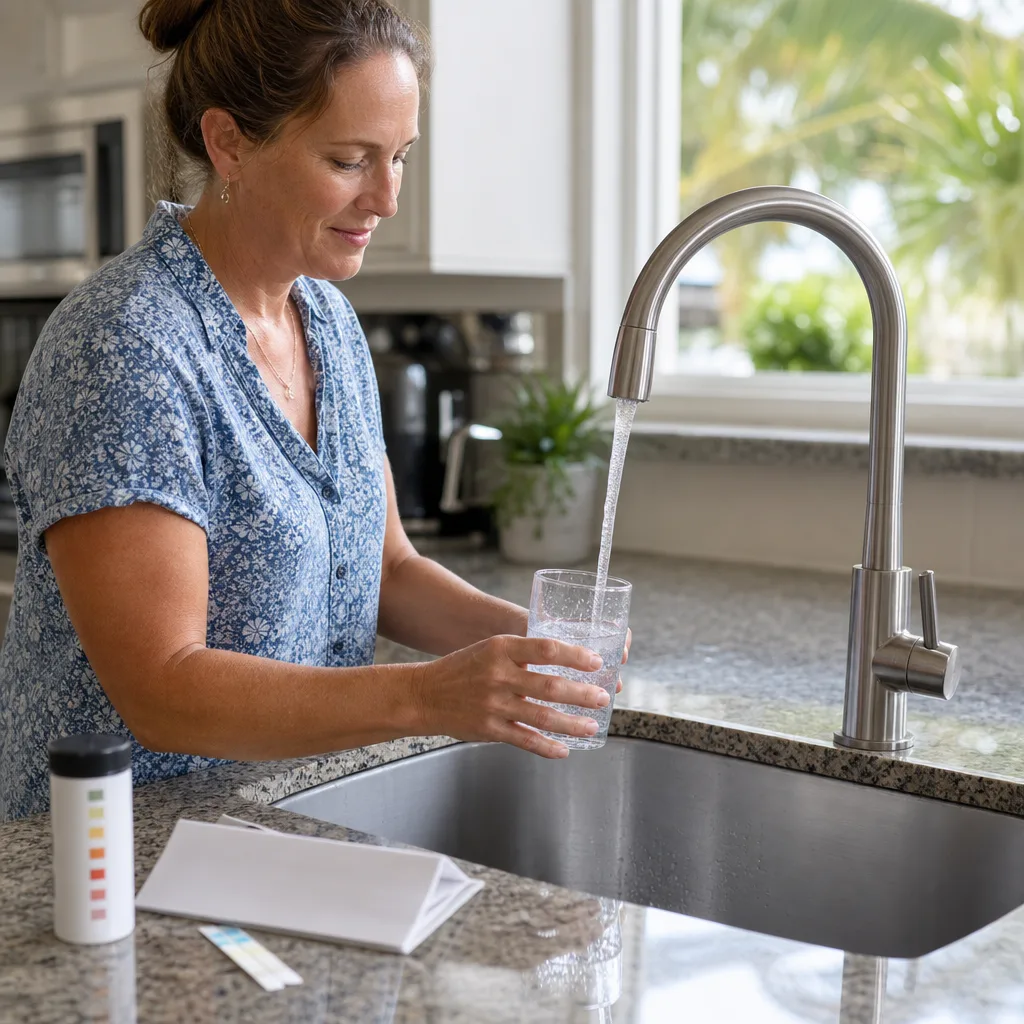
Clear well water flowing from kitchen faucet after disinfection in Palm Coast

Signs Your Well Water Needs Disinfection, Not Just Filtration

A filter catches stuff. Disinfection kills stuff. Those are two different jobs, and mixing them up is the most common mistake I see on private wells out here.

Orange stains in your toilet bowl? That's iron, and even 0.3 ppm (parts per million) will stain. Rotten-egg smell out of the hot tap only? Usually the water heater anode rod. Yellow or tea-colored water after a heavy rain? Tannins from decaying organic matter in the soil. None of those need chlorine shock. They need the right filter sized to your water.

But some symptoms are a different animal.

  • A lab test comes back positive for total coliform or E. coli
  • Pink, black, or gray slime building up in toilet tanks, sink drains, or on faucet aerators
  • Your well cap, casing (the pipe that lines the well), or pump was just opened, pulled, or replaced
  • Floodwater reached the wellhead after a tropical system or heavy Flagler County rain
  • The smell hits on both hot and cold sides, and it got worse over weeks rather than showing up all at once
  • The well sat unused for a season while the house was empty

Any one of those, and shock chlorination is the right first move. Nothing you bolt onto the plumbing fixes bacteria living inside the well casing itself. The contamination is upstream of every filter you own.

That slime one trips people up constantly. Folks scrub the toilet tank, it comes back in three weeks, they scrub again. That's iron bacteria or sulfur bacteria colonizing the system, and scrubbing fixtures does nothing about the source.

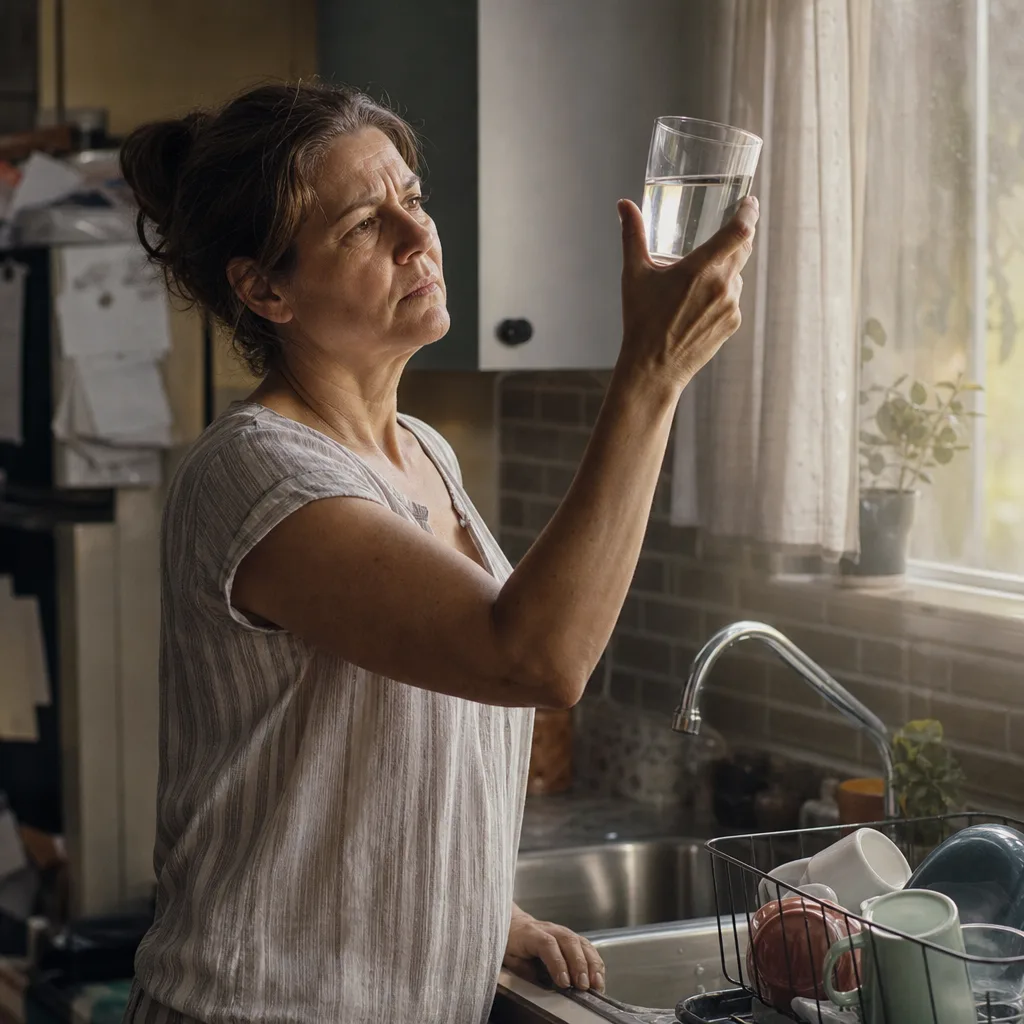
Here's the honest part. You can't tell bacteria by looking, smelling, or tasting. Coliform-positive water often looks perfectly clear. The only real answer is a lab test on a collected sample, and a good water treatment supplier will tell you that before selling you a single piece of equipment. A clear glass of well water can still carry bacteria you can't see.

Well water is untreated by definition. Nobody's chlorinating it for you the way the city does — that responsibility lands on you.

That same focus carries through the practical water treatment supplier guidance our team provides to local families.

Why So Many In Palm Coast Call Us First

Local Folks, Local Knowledge

We live and work right here in Palm Coast. We understand our specific water challenges. We're not some big company from out of town; we're your neighbors.

60+ Five-Star Reviews

Our customers rate us 5.0 stars across Google and Facebook. We've earned that reputation one job at a time — showing up on time, charging what we quote, and fixing it right the first time.

Reasonable Diagnosis Fee

We charge a reasonable fee to tell you what's wrong. You'll get a clear explanation and upfront pricing. If you choose us to do the work, we may waive your diagnostic fee.

Fixed Right or It's Free

Not happy with our work? We come back and make it right at no charge. If we can't fix it to your satisfaction, you don't pay. No fine print.

Homeowner inspecting well water clarity at kitchen sink in Palm Coast

Why Flagler County Wells Are Exposed After Storms

Here's the part most well owners don't realize. A well isn't a sealed box. It's a pipe that runs down into the ground, and the ground around it gets wet.

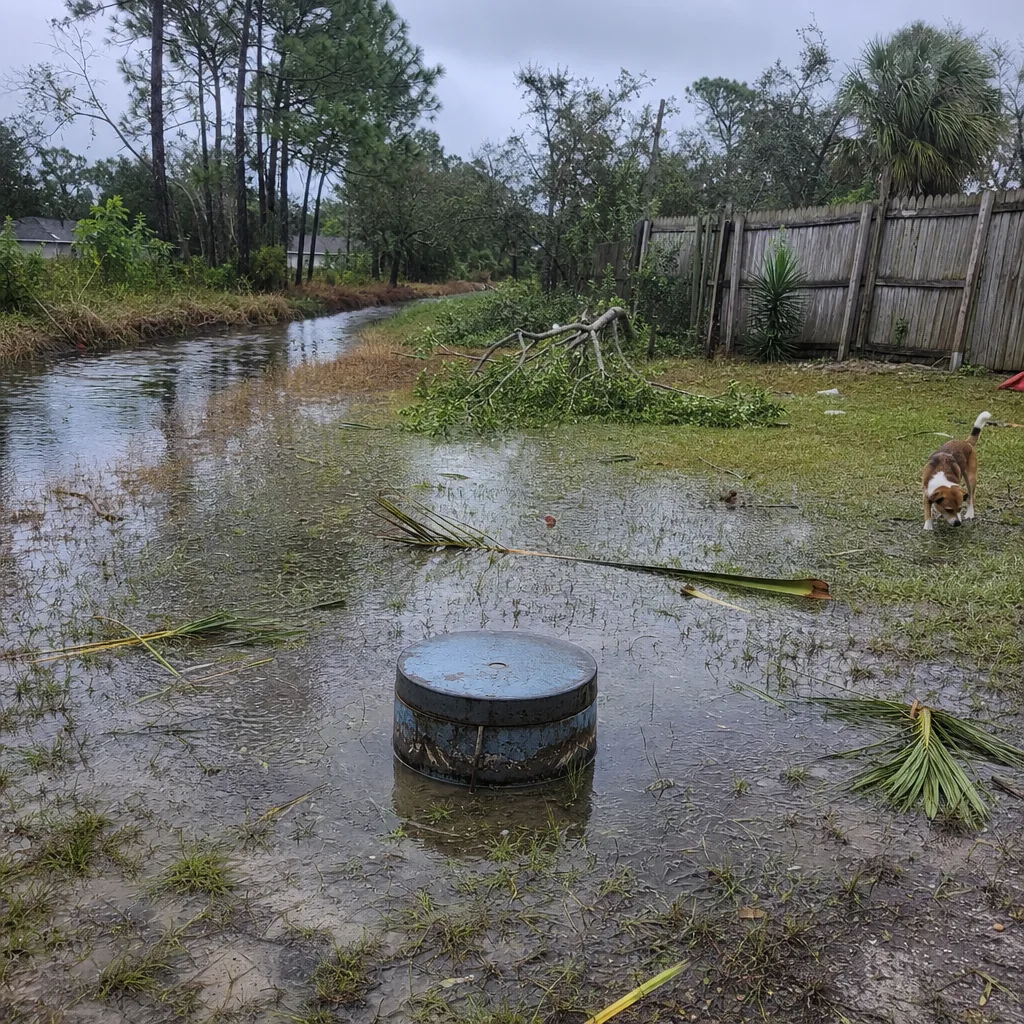
Flagler County sits low and flat. When we get three or four inches of rain in a day, the swales (shallow grassy drainage ditches) fill, the yards puddle, and that water sits. Our soil is sandy, so it moves fast. Surface water carrying bacteria from septic drainfields, animal waste, or standing runoff can work its way down along the well casing and into the water you're drinking.

The shallow wells are the ones that worry me most. Plenty of homes out toward Seminole Woods and the western edge of Palm Coast draw from the surficial aquifer (the shallow groundwater layer closest to the surface), and that water table can sit just a few feet below your lawn after a wet stretch. Deeper wells have more soil doing the filtering. Shallow ones don't get that buffer.

Then there's the well cap itself. Cracked, loose, or sitting too low in a spot that floods — that's a direct opening. I've pulled caps off wells that had insects, grass clippings, and standing water sitting right on top of the casing.

Power outages matter too. When the pump goes down, pressure in your plumbing drops. Losing pressure can let outside water pull back toward the system instead of pushing out. That's why we tell folks to treat a long outage the same way they'd treat a flooded wellhead.

Was your wellhead underwater after the last storm, even briefly? Then assume bacteria got in. Well water disinfection is the reset button, and a follow-up lab test is the only way to confirm it worked.

Flooded well casing after storm flooding in Flagler County Palm Coast

The Shock Chlorination Process, Step by Step

People picture somebody dumping bleach down a hole. It's more careful than that. The whole point is getting a measured dose of chlorine into every inch of the system, holding it there long enough to work, then getting all of it back out.

  • Test first. We check what's in your water and look over the wellhead, the cap, and the casing. If a cracked cap or a flooded pit is letting surface water in, chlorine won't fix that.
  • Calculate the dose based on well depth, casing size, and how much water is standing in the column. Guessing here is how people end up with a well that either stays contaminated or reeks of chlorine for two weeks.
  • Introduce the solution at the wellhead and circulate it. We run a hose back down the casing to wash the sides, then open fixtures one at a time until you smell chlorine at every tap — hot and cold, inside and out, including the hose bibs (outdoor faucets).
  • Let it sit. Usually overnight, sometimes longer. No water use at all during contact time (while the chlorine sits in the system), which is the part folks find annoying, but it's non-negotiable.
  • Flush it out. We run water until the chlorine is gone, discharging away from your septic drainfield, grass, and any pond or canal. Plenty of Palm Coast lots back up to water, so where that flush goes matters.
  • Retest after the system has been back in normal use for several days. Immediate results can read clean and still be wrong.

That last step is the one that gets skipped. And it's the only step that tells you whether the problem is gone or just hiding.

One more thing worth knowing. Chlorine loosens iron and sediment coating the inside of your pipes, so the first hour of flushing can run rusty or cloudy. That's normal; it clears. But if you've got a softener, a carbon filter, or a UV (ultraviolet light) unit, we bypass or pull the media (the filter material inside) beforehand. Sending a slug of strong chlorine through softener resin (the beads inside a softener that remove hardness) will cook it, and I've replaced resin tanks for folks who learned that the hard way.

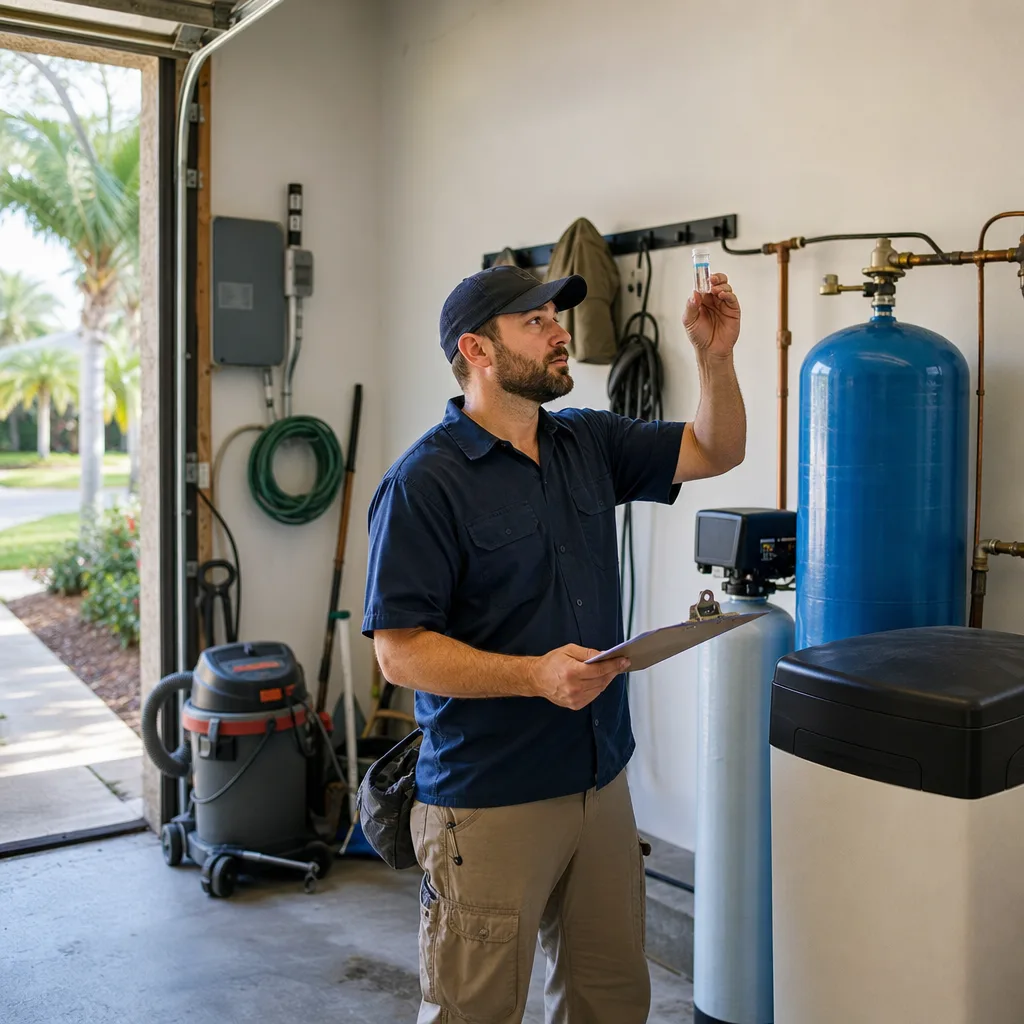
Technician testing chlorine residual levels in Palm Coast well water system

What Shock Chlorination Won't Fix (And What Will)

Here's the part most people don't hear. Shock chlorination kills bacteria. That's it. It doesn't remove iron, it doesn't soften hard water, and it won't touch tannins or nitrates. If your problem isn't bacterial, chlorine is the wrong tool and you'll be right back where you started in two weeks.

We see this every single week. Somebody shocks the well because the water smells, the smell fades for ten days, and then it comes roaring back. Nine times out of ten, that's sulfur bacteria feeding on a constant supply, or hydrogen sulfide coming up in the water itself. One's a disinfection problem. The other needs a sulfur filter.

So how do you tell them apart? Start with what you're seeing.

  • Orange or rust stains in toilets and sinks — that's iron, and even 0.3 ppm will stain. You need an iron filter, not chlorine.
  • White crusty scale on faucets and glass shower doors — that's hardness. Palm Coast wells commonly run 15 to 25 grains per gallon (the standard unit for measuring water hardness). A softener fixes it.
  • Yellow or tea-colored water that's clear, not cloudy — tannins from decaying organic matter. Common in wooded lots out toward Seminole Woods. Needs a tannin removal system.
  • Blue-green staining on fixtures or pinhole leaks in copper — acidic water below pH 6.5. That's a neutralizer (a filter that raises the water's pH) job.
  • Rotten-egg smell that returns within weeks of shocking — likely a sulfur filter situation, not a repeat shock.

And here's the honest version: if your last lab test came back clean for coliform and you're just chasing a taste or a stain, don't shock the well. You'll dump chlorine down a perfectly healthy aquifer and solve nothing.

A lab test settles the question instead of a guess. We match the treatment to the problem. Nothing more, nothing less.
Sometimes the answer is both. A well with confirmed coliform and heavy iron needs the shock first, then filtration to keep the iron bacteria from recolonizing. Skip step two and you're shocking again by spring.

Frequently Asked Questions

Common questions about Well Water Disinfection & Shock Chlorination

You need shock chlorination when a lab test shows coliform or E. coli, or you see slime in the toilet tank after the well cap or pump was disturbed. Rust stains, sulfur smell from the hot tap, or tea-colored water are filtration problems, not bacteria. The only way to be sure is a lab sample, since bacteria-positive water can still look completely clear in the glass.

Heavy rain lets surface water carry bacteria down along the well casing into the aquifer, especially in shallow wells near Seminole Woods and western Palm Coast. Our sandy soil moves water fast, so there's less natural filtering than in deeper wells. A cracked or low-sitting well cap makes this worse. If your wellhead sat underwater, even briefly, assume bacteria got in and plan on disinfection.

Not always. If the smell shows up at every tap, hot and cold, it's usually hydrogen sulfide gas in the source water, which needs a filter, not a shock. If it only happens on the hot side, that's typically your water heater's anode rod reacting with sulfur. Shock chlorination only helps when a lab test or sudden musty taste points to actual bacterial contamination in the well.

A well that sat idle for a season, like during a house sale or extended vacancy, is a strong candidate for shock chlorination before you use the water again. Standing water in a casing gives bacteria time to build up. We treat this the same way we'd treat a flooded wellhead, and we always recommend a follow-up lab test to confirm the water is safe before you settle back in.

Yes. When your pump loses power, pressure drops in your plumbing, and that drop can let outside water pull back into the system instead of pushing out. After a long outage during a Flagler County storm, we treat it like a flooded wellhead. Disinfection resets the system, and a lab test afterward confirms the bacteria are gone.

Both. A test beforehand tells us if you have bacteria, since symptoms like slime or odor can be misleading on their own. A follow-up test after treatment confirms the chlorination worked and your water is safe to drink again. Skipping either step means you're guessing instead of knowing what's really in your well.

Well Water Disinfection & Shock Chlorination for Safe, Lab-Confirmed Water

Not sure if your well needs a shock or a filter? Call Ionex Water before you spend money on the wrong fix. We test first, treat only what your water actually needs, and retest afterward, so you know the bacteria are gone and your family's water is safe to drink again. Get your free consultation today.

© Copyright Ionex Water Systems.
Mailing Address Only: 10 Wood Clift Ln, Palm Coast, FL 32164