<-- Back to Water Purification Company
Quick Summary: Well water and city water break down RO systems in different ways. Well water loads up sediment filters and membranes fast because of iron and sand. City water chews through carbon filters because of chlorine. Knowing your source tells us where to look first.
Google Review by David St. Onge
"Darren repaired our RO water system and went above and beyond by connecting our refrigerator to it, so now all of our drinking water and ice are filtered through the RO system. The improvement in water quality is noticeable.
What really sets Darren apart is his deep knowledge, honest recommendations, and exceptional customer service. He even followed up a few days later to make sure everything was functioning perfectly. That kind of care and professionalism is rare these days. I can’t say enough good things about Darren or Ionex Water, and I would highly recommend them to anyone looking for reliable, expert water system service."
Here's something a lot of folks don't think about. Your RO system doesn't fail the same way twice if your water source is different. We've tested two homes on the same street, one on well water and one on city water, with completely different failure patterns.
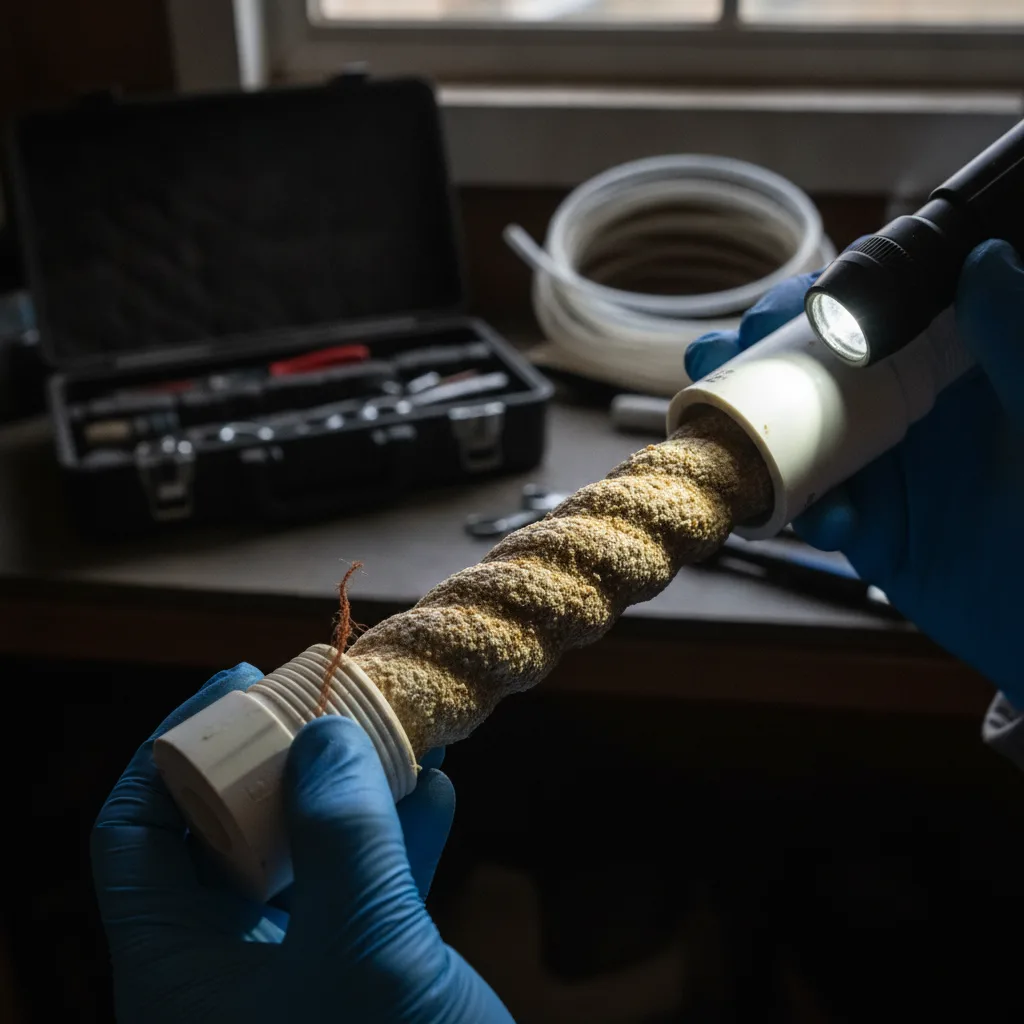
Well water homes, especially out past Old Kings Road, tend to clog sediment pre-filters fast. Sand, silt, and iron particles are common in Flagler County wells. That pre-filter does hard labor before the water reaches your membrane. Skip changing it and the membrane takes the hit next. Membranes cost more to replace than filters.
City water in Palm Coast is treated with chlorine before it reaches your home. That's good for killing bacteria, but bad for RO membranes. Chlorine breaks down the membrane material over time if your carbon pre-filter isn't doing its job. City water customers usually see carbon filter exhaustion first, not sediment clogging.
When someone calls us about bad-tasting RO water, the first question we ask is well or city. It changes everything about where we start looking.
A water test shows what's really in your water instead of leaving us to guess. That's the whole point of checking your water source before we open up the unit.
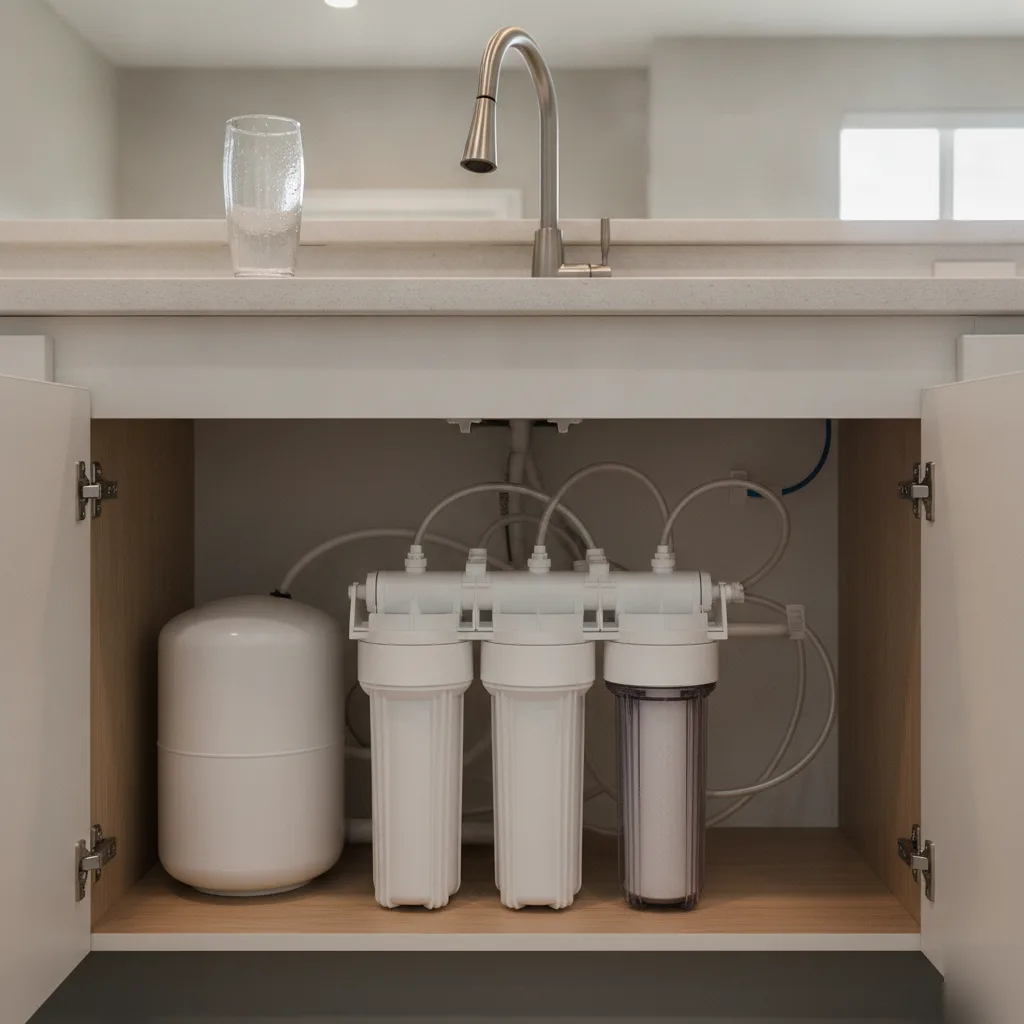
Water trickling out instead of flowing? Water tastes off again after months of being fine? Puddle under the cabinet you can't explain? Each one points somewhere different. Guessing wrong just wastes time.
Slow flow at the faucet is the one we hear about most. It's often a clogged pre-filter or a tired membrane that's lost its push. Sediment from well water clogs pre-filters faster than city water. If you're on a well out past Old Kings Road, this may happen more often than in a city-water neighborhood.
Bad taste or smell returning is a different animal. That usually means the carbon filter stage is worn out. Chlorine or odor compounds are slipping through again. It's not the membrane's job to catch that stuff, so replacing the wrong part fixes nothing.
Leaks almost always trace back to a fitting, a cracked storage tank, or a failed check valve, not the membrane itself. We see this every week. A tank that's lost its air charge will also drip or hum oddly. That's a repair, not a full system swap.
If you want the full rundown on how these systems work and what's involved start to finish, take a look at our main Water Purification Company service page for the bigger picture.
We live and work right here in Palm Coast. We understand our specific water challenges. We're not some big company from out of town; we're your neighbors.
Our customers rate us 5.0 stars across Google and Facebook. We've earned that reputation one job at a time — showing up on time, charging what we quote, and fixing it right the first time.
We charge a reasonable fee to tell you what's wrong. You'll get a clear explanation and upfront pricing. If you choose us to do the work, we may waive your diagnostic fee.
Not happy with our work? We come back and make it right at no charge. If we can't fix it to your satisfaction, you don't pay. No fine print.
Here's something we tell folks all the time. Your RO system isn't always the culprit.
We've pulled up to homes near Old Kings Road expecting a bad membrane, and found the real problem was upstream. Sediment loading up a whole-house filter. A failing pressure tank. Even a water softener that quit working right, sending hard water straight into the RO unit and burning through the membrane faster than it should. If your softener's resin tank isn't cycling correctly, your RO membrane takes the hit instead.
So how do you tell the difference? A few signs point away from the RO unit itself.
When a customer says the RO water tastes off, it's often the whole-house system feeding it. Fix that first, and the RO unit often goes right back to normal.
That's why we test before we touch anything. A proper water test shows what's really there instead of guessing. It saves you from paying to replace a membrane that was never the issue. If your well water runs 15 to 25 grains of hardness like a lot of Palm Coast Plantation homes, that hardness has to get handled before it reaches the RO stage, not after.
Need help with Reverse Osmosis Repair? Get Your Free Consultation Today. Ionex Water LLC is ready to help.
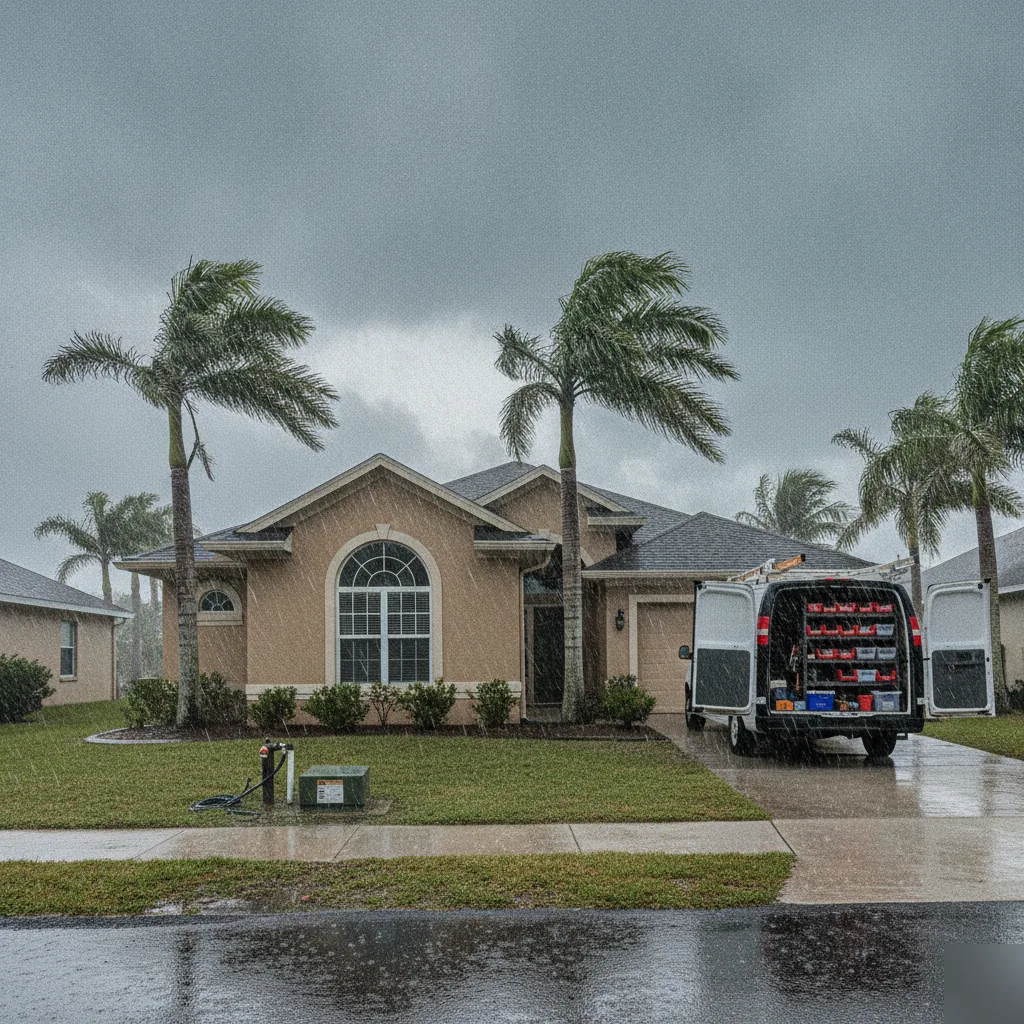
Summer in Palm Coast means heavy rain, and heavy rain changes what's coming into your well. We see it every hurricane season. Sediment spikes after a storm, and that extra grit hits your RO pre-filter hard. A filter that normally lasts six to twelve months might clog in half that time when the water's stirred up.
Older homes add their own wrinkle. Plenty of houses in Palm Coast Plantation and along Old Kings Road are decades old now. The plumbing has seen its share of hard water scale. Scale doesn't just build up in pipes. It builds up in the tiny fittings and valves inside your RO system too. Add in a well that runs 15 to 25 grains of hardness and you've got a system working overtime just to keep up.
Here's a scenario we run into a lot. A homeowner notices their RO faucet is slower than usual right after a big storm. By the time it's fixed, they realize the sediment filter looks like mud. That's just Palm Coast.
Homes near the Intracoastal deal with another layer. Ground shifts and well conditions can vary block to block. Same neighborhood, same storm, completely different water. That's why we test before we touch anything. Checking the water directly shows what's really there instead of guessing. It's the only way to know if you need a filter change, a membrane replacement, or something else entirely.
If your system's acting up after a rough weather stretch, don't assume it's failing for good. Most times, it just needs the right part swapped, not a whole new setup.
You call, you tell us the symptom. We ask a few questions before we show up. Slow flow, bad taste, a leak under the sink, a membrane nobody's touched in three years - each one points us in a different direction before we knock on the door.
Once we're there, we don't start swapping parts and hoping. We check the tank pressure first. Low tank pressure gets blamed on the membrane all the time, and it's almost never the membrane.
Most repair visits run under an hour once we know what we're dealing with. If it's a membrane that's worn out from years of use, we'll swap it. If it's a $12 check valve letting water sneak backward into the tank, we're not selling you a new membrane you don't need.
We match the treatment to the problem. Nothing more, nothing less.
That's the whole point of testing before touching anything. Guessing costs you money twice, once for the wrong part and again for the right one.
We schedule most Palm Coast repair calls within a day or two of your call. If your water is leaking or not flowing at all, tell us when you call so we can bump up the timeline. Storm season tends to bring more calls at once, especially from well water homes near Old Kings Road, so booking early helps us get to you faster.
We start by asking whether you're on well or city water, then run a water test before touching anything. This tells us if the real problem is the RO unit itself or something upstream, like a softener or pressure tank. From there we check the pre-filter, membrane, tank, and fittings to find exactly what's failing, then explain what needs fixing.
Well water in Flagler County carries sediment, sand, and iron that load up your pre-filter quickly. Homes out past Old Kings Road see this often because that grit hits the pre-filter before it ever reaches the membrane. Skipping filter changes lets that sediment pass through and damage the membrane instead, which costs more to fix.
A returning bad taste almost always means your carbon filter stage is worn out, not the membrane. Chlorine or odor compounds start slipping through once that carbon filter is spent. This is common with city water customers in Palm Coast, since municipal water is treated with chlorine before it reaches your home.
Not usually. Leaks almost always trace back to a loose fitting, cracked tubing, or a failing storage tank, not the membrane itself. A tank that's lost its air charge can also drip or hum. These are repairs we handle without replacing the whole unit, which saves you from an unnecessary full swap.
Low pressure at every faucet, not just the RO tap, usually points to your well pump or pressure tank. If your softener's resin tank isn't cycling right, hard water hits your RO membrane harder than normal. Palm Coast Plantation wells often run 15 to 25 grains of hardness, so that softener needs checking first.
Get your Reverse Osmosis system repaired today and start enjoying your water again.
© Copyright Ionex Water Systems.
Mailing Address Only: 10 Wood Clift Ln, Palm Coast, FL 32164