<-- Back to Water Treatment Supplier

Brackish Water & High TDS Treatment in Palm Coast: Fixing Salty, Off-Tasting Water

Quick Summary: Salty, metallic, or flat-tasting water isn't something you have to live with. Many Palm Coast wells, especially near the Intracoastal and canals, carry high total dissolved solids (TDS) that a water softener alone can't fix. At Ionex Water, we test your water first, so you know exactly what's in it before anyone recommends equipment. Then we match the right treatment, from under-sink reverse osmosis to whole-house systems, to your actual numbers. The result: better-tasting water, cleaner glassware, less scale on your fixtures, and no money wasted on the wrong system.

Lifetime Warranty

We offer a Lifetime Guarantee on many of our products.

Financing Available

We offer creative financing options for larger purchases.

Fast Installation & Repairs

Don't deal with bad water any longer than necessary.

Satisfaction Guaranteed

You don't pay until you're 100% happy with our services :)
Google Review by Pamela Emrich

"Darren and Joey did a phenomenal job installing our water system on our home. It has made such a difference in our water! We highly recommend them!"

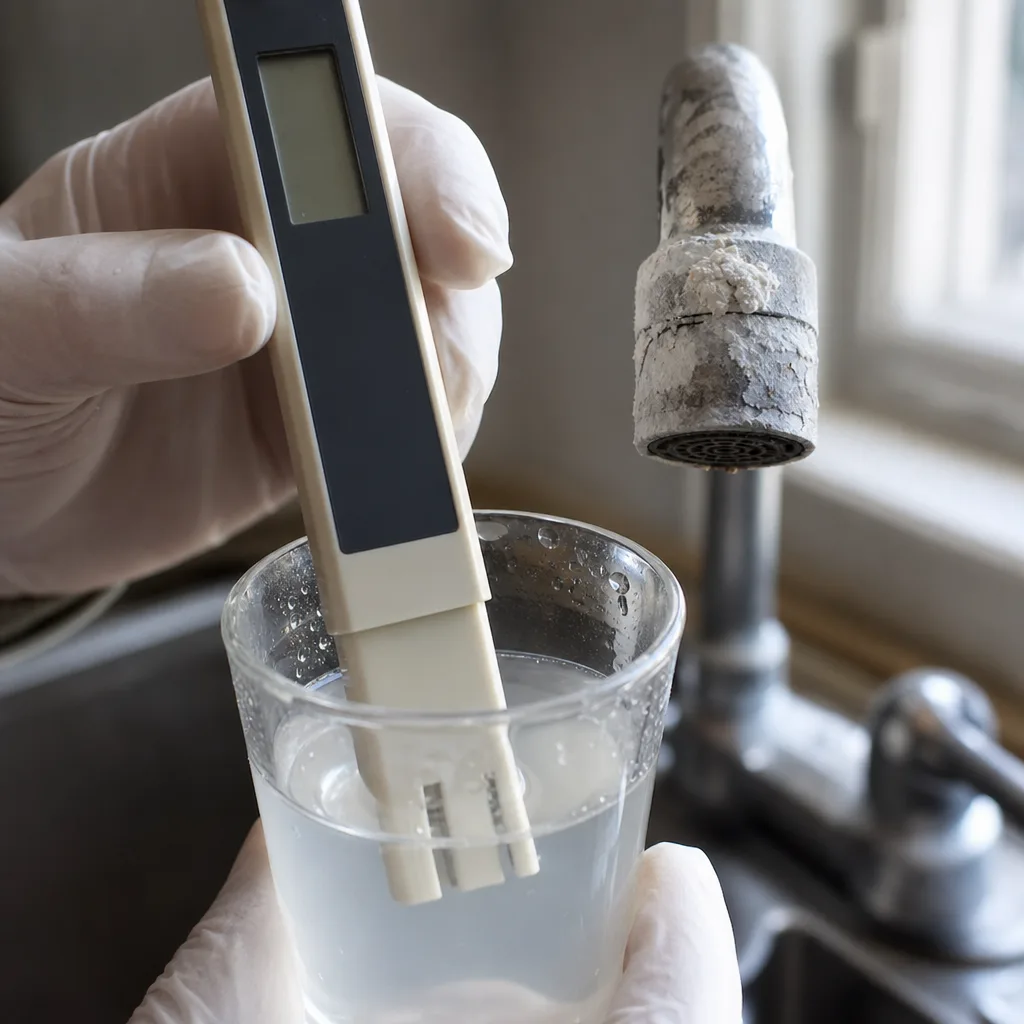
Close-up TDS meter reading salty well water with scale buildup Palm Coast

Salty Taste and Scale Signal a TDS Problem, Not Just Hardness

Hard water is one thing. Total dissolved solids (TDS) is everything dissolved in your water added together, including salts and chlorides a softener was never built to touch. If your water tastes salty or metallic and a softener didn't fix it, you're likely looking at a TDS problem instead of a hardness problem.

Here's the part that trips people up. A softener trades calcium and magnesium for sodium. That's it. It does nothing for chloride, sulfate, or the dozens of other dissolved minerals that push TDS up.

So you can have soft water that still tastes awful.

The tell is usually taste. Salty. Sometimes flat and metallic, like licking a penny. Coffee comes out muddy no matter what beans you buy. Ice cubes freeze cloudy with a white core. Your glassware keeps a haze after the dishwasher runs, even with rinse aid, because dissolved solids don't evaporate. They stay behind as a film.

We see this every single week with wells on the east side of town, closer to the Intracoastal, where shallower wells can pick up saltier water from the aquifer (the underground layer of rock and sand that holds groundwater). Two houses on the same street, same well depth, completely different readings. That's why I don't guess. A TDS meter gives you a number in about a minute, and that number tells us whether we're dealing with 300 parts per million (ppm) or 1,500.

Watch your appliances too. High-TDS water leaves crusty white buildup on faucet aerators and water heater elements faster than plain hard water does, and it's harder on stainless steel. Some folks notice their softener burning through salt way quicker than it used to — that's another flag.

Know your water. Then treat it right. Testing shows what's really there instead of guessing, and with brackish (slightly salty) water the difference between a softener and a reverse osmosis system comes down entirely to that number.
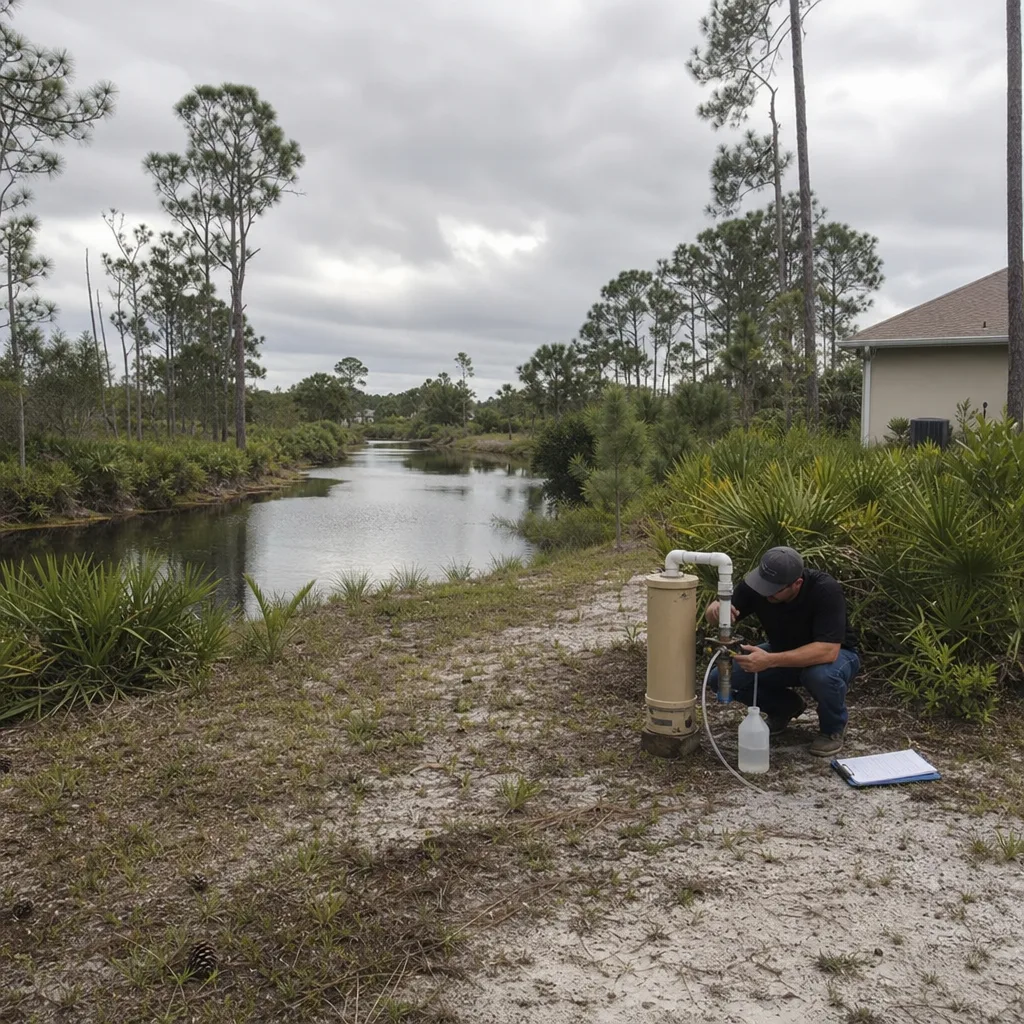
Well water sampling near canal in Palm Coast for TDS testing

Well Depth and Canal Proximity Change What's in Palm Coast Water

Your water tastes a little salty. Or flat. Or it leaves a white film on everything, even after the softener runs. That's usually total dissolved solids, and in this part of Flagler County the number moves around a lot depending on where your water comes from.

Depth matters more than people expect. Shallow wells pull from surface-fed sand. Go deeper and you hit older water that's been sitting in limestone, picking up minerals the whole time. Deeper isn't automatically better. It's just different, and sometimes it's a lot saltier.

Then there's the saltwater side of it.

Homes sitting close to the Intracoastal and the saltwater canal system can see brackish influence in their well water, especially when the aquifer gets drawn down during a dry stretch. Out toward Palm Coast Plantation and the wooded lots in Seminole Woods, private wells are common, and nobody's treating that water before it reaches your tap. City water is a different animal. It's treated, but it still carries dissolved minerals, and Palm Coast hardness commonly runs 15 to 25 grains per gallon (the standard unit for measuring water hardness).

I've tested two homes on the same street with completely different results. Same builder, same era, same road. One needed nothing but a softener. The other had TDS high enough that a softener alone would've been a waste of the homeowner's money.

So how do you know which house you've got? You test. Hardness is one number, TDS is another, and they don't always track together. A quality water treatment supplier should be able to tell you both before anybody talks about equipment. Know your water. Then treat it right.

Seasonal swings are real too. Late spring, after weeks without rain, we'll get calls from folks whose water suddenly tastes off. Same well, same pump, different water.

That same focus carries through the practical water treatment supplier guidance our team provides to local families.

Why So Many In Palm Coast Call Us First

Local Folks, Local Knowledge

We live and work right here in Palm Coast. We understand our specific water challenges. We're not some big company from out of town; we're your neighbors.

60+ Five-Star Reviews

Our customers rate us 5.0 stars across Google and Facebook. We've earned that reputation one job at a time — showing up on time, charging what we quote, and fixing it right the first time.

Reasonable Diagnosis Fee

We charge a reasonable fee to tell you what's wrong. You'll get a clear explanation and upfront pricing. If you choose us to do the work, we may waive your diagnostic fee.

Fixed Right or It's Free

Not happy with our work? We come back and make it right at no charge. If we can't fix it to your satisfaction, you don't pay. No fine print.

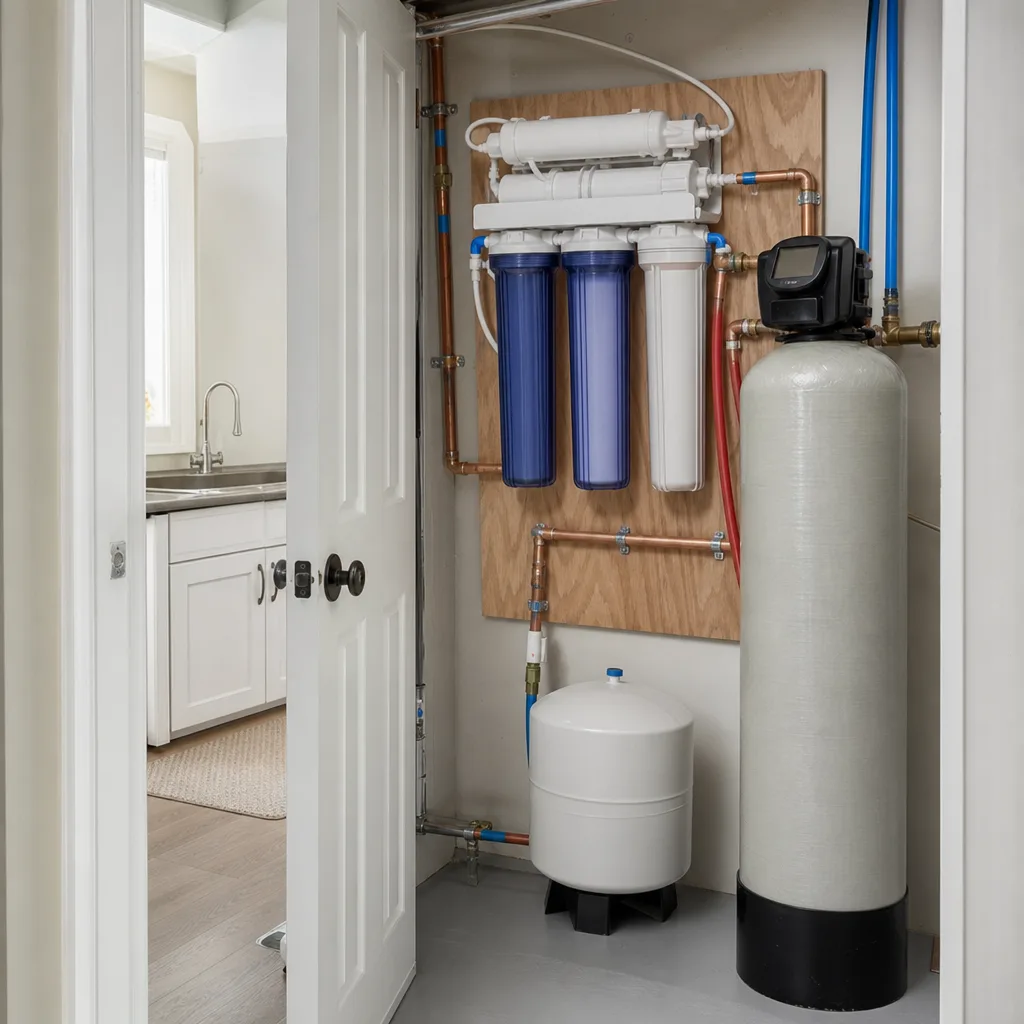
Completed reverse osmosis and softener installation in Palm Coast home

A Water Softener Alone Won't Fix High TDS or Salty Water

You bought a softener. The scale went away, the soap lathers again, and the water still tastes like a mouthful of pennies mixed with salt. That's not a broken softener. That's a softener doing exactly what it was built to do and nothing more.

Here's the short version. A softener swaps calcium and magnesium for sodium. It's an exchange, not a removal. The hardness minerals leave, sodium takes their place, and your total dissolved solids stay right about where they started. Sometimes they nudge up a little.

So if your water reads 15 to 25 grains of hardness and 1,400 ppm TDS, the softener handles the grains. The 1,400 doesn't budge.

This trips people up constantly. I've walked into homes where a perfectly good softener was getting blamed for salty water, and the real issue was chloride from a well drawing too close to brackish layers. Same equipment, wrong job. We size the fix to what the test actually shows.

What brings TDS down is reverse osmosis (RO). RO pushes water through a membrane fine enough to strip out dissolved salts, sodium, chlorides, and a long list of other contaminants, in the range of 95 to 99 percent removal. Point-of-use (single-faucet) RO under the kitchen sink handles drinking and cooking. Whole-house RO exists for severe cases. It's a bigger system with a bigger footprint, and it needs the right pretreatment in front of it.

And that pretreatment part matters more than people think. Hardness, iron, and sediment will foul (clog) an RO membrane fast. So on brackish water in Palm Coast, the softener usually isn't replaced. It gets repositioned as the bodyguard for the RO behind it.

Two pieces of equipment, two different jobs — one protects the other.

Thinking about brackish water and high-TDS treatment? Let's talk. Get your free consultation today. Ionex Water LLC is ready to help.

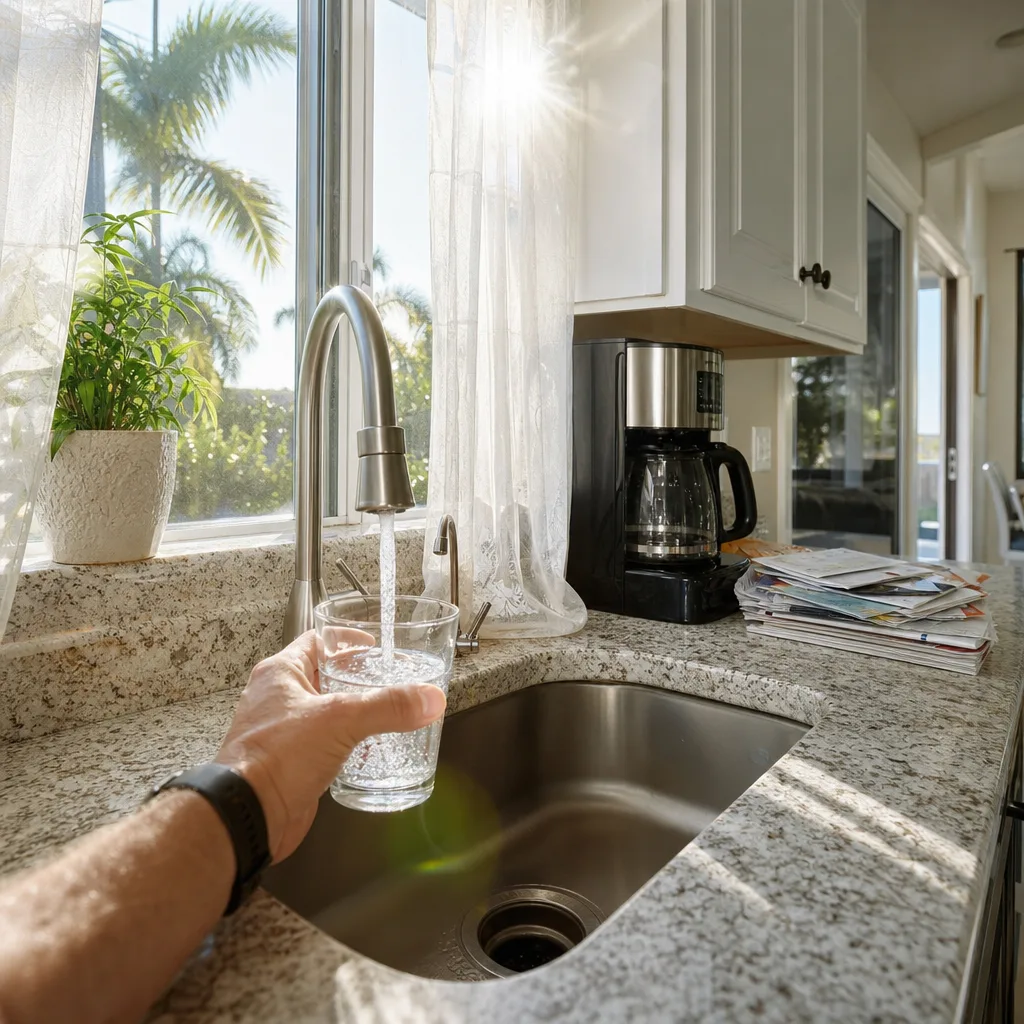
Homeowner filling glass from RO faucet after Palm Coast TDS treatment

Testing Comes Before Any Equipment Recommendation

A TDS meter gives you one number. That number tells you how much dissolved stuff is in your water. It does not tell you what that stuff is. And that's the whole problem with buying equipment off a single reading.

Two homes can both read 1,400 ppm. One is mostly calcium and magnesium hardness; the other is loaded with sodium and chloride from a shallow well sitting too close to the Intracoastal. Same number. Completely different fix. Put a softener on the second house and you'll trade one problem for another.

So we break the water down before we say a word about tanks or membranes.

Our free test takes about 15 minutes and checks hardness. That's a real starting point, but on a high-TDS well it's only step one. Testing for iron, pH (how acidic the water is), chlorine, sulfur, and TDS itself is separate, affordable testing, and a full lab analysis for bacteria, nitrates, and arsenic is its own thing again. Well water is untreated by definition. Nobody is checking it but you.

Here's what a proper workup tells us:

  • Hardness in grains per gallon, so we know how much of that TDS a softener can even touch
  • Iron level, because 0.3 ppm is enough to stain a toilet orange
  • pH, since anything under 6.5 chews on copper pipe and leaves blue-green staining
  • Sulfur, the rotten-egg smell that shows up in deeper wells
  • Sodium and chloride, the fingerprint of real brackish intrusion (salty water seeping into your well's water source)
  • Total TDS, so we can size a reverse osmosis system that won't choke

I've tested two houses on the same street with the same well depth and gotten different answers. Testing shows what's really there instead of guessing. The right fix depends on the number, not on the neighborhood.

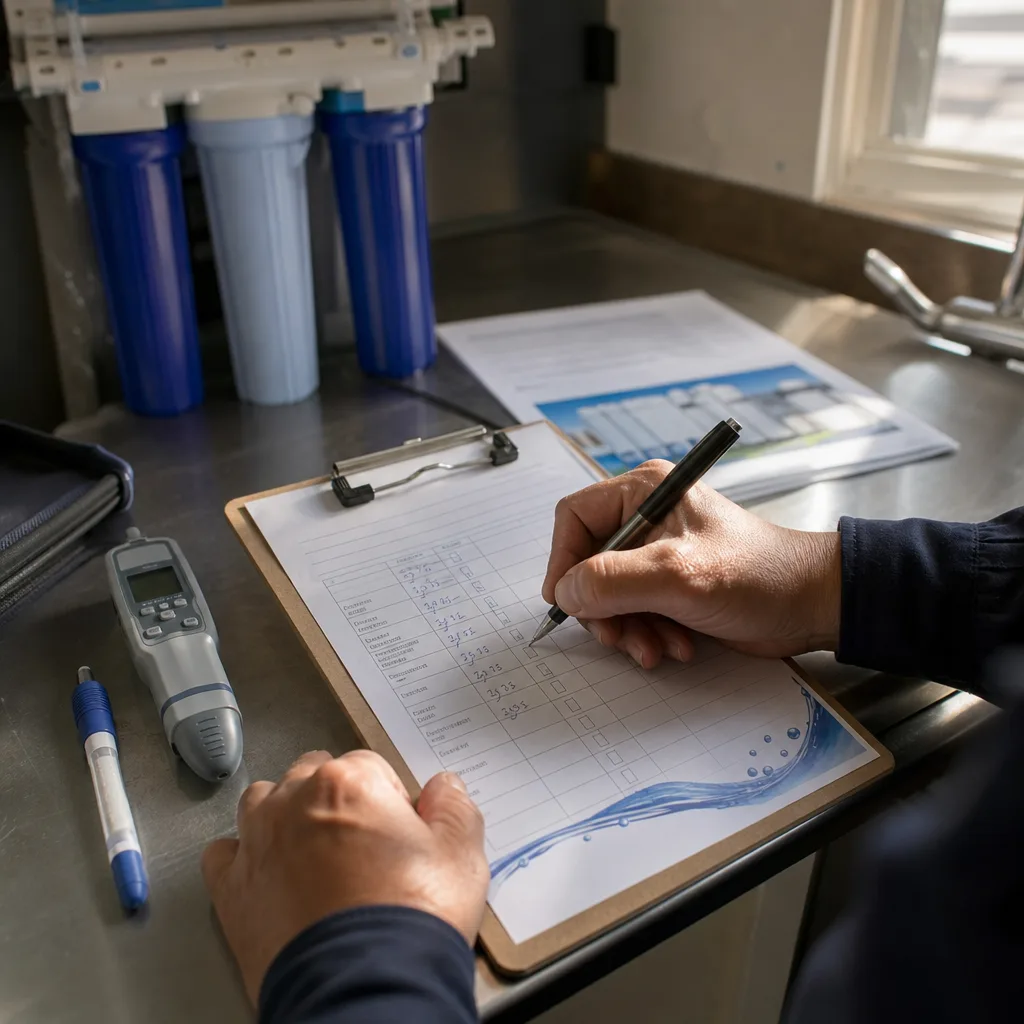
Technician recording water test results before Palm Coast TDS pricing

How Reverse Osmosis and Whole-House Treatment Are Priced

Nobody can price this over the phone. And if somebody does, be careful. Brackish water and high-TDS treatment is priced off numbers, not guesses, so the test comes first and the quote comes second.

In this trade, cost tracks three things. How much dissolved solids you're pulling out. How many gallons a day you need treated. And what's riding along with the TDS — iron, sulfur, tannins (plant-based compounds that tint water tea-colored), low pH.

That last one catches people. A drinking water reverse osmosis system under the sink treats a few gallons a day and prices very differently from whole-house treatment that has to handle showers, laundry, and irrigation at the same time. Same water, two completely different builds.

  • Raw TDS reading. Higher dissolved solids mean more membrane surface and more reject water (the wastewater RO sends down the drain), and that pushes equipment size up.
  • Flow demand. A two-bath house and a five-bath house on the Intracoastal need different gallons-per-minute ratings.
  • Pretreatment. Iron over 0.3 ppm will foul an RO membrane, so a sediment or iron filter often has to go in ahead of it.
  • Drain and power access. Reverse osmosis needs a drain line, and where that drain sits in the garage affects labor.
  • Ongoing costs. Filter changes run every 6 to 12 months, and RO membranes get replaced on their own schedule.

Here's the question I'd ask any company quoting you: What's my TDS number, and what's the treated number going to be?

If they can't answer both, they're selling equipment instead of fixing water. The right system matches the numbers on your test, nothing more and nothing less. Buying direct from the manufacturer with no middleman is how we keep wholesale pricing on the hardware itself, but the sizing still has to be right, or you're paying for capacity you'll never use.

Frequently Asked Questions

Brackish Water & High TDS Treatment FAQs

In much of Flagler County, the deeper Upper Floridan aquifer (the main underground water layer) holds water that's only marginally drinkable or brackish. Heavy pumping, dry stretches, and homes close to the Intracoastal and saltwater canals can pull that saltier water into private wells. The result is high total dissolved solids (TDS), mostly sodium and chloride, that shows up as a salty or metallic taste, white film on glassware, and fast scale buildup. A water test tells us exactly what's causing it.

No. A softener swaps hardness minerals (calcium and magnesium) for sodium, so your water feels softer, but total dissolved solids stay about the same. It does nothing for the chloride and sodium that make brackish water taste salty. On North Florida wells, the softener usually stays in place as pretreatment to protect a reverse osmosis (RO) system, which is what actually removes dissolved salts.

The EPA's guideline for TDS is 500 mg/L (about 500 ppm), and for chloride it's 250 mg/L. Above those levels, water tends to taste salty and leave deposits. These are taste-and-appearance guidelines rather than health limits, so a high reading doesn't automatically mean your water is unsafe. It does mean you should find out what makes up that number. Brackish wells near the Florida coast often test above 1,000 ppm.

Most North Florida homes with high TDS start with an under-sink RO system for drinking and cooking water, paired with a softener or filter for the rest of the house. Whole-house RO is for severe brackish water, where the salt causes problems in showers, laundry, and appliances too. It's a bigger system that needs pretreatment, storage, and a plan for the wastewater. Your test results decide which one makes sense.

RO always sends some water down the drain to flush away the salts it removes. On well water with proper pretreatment, that's typically 2 to 3 gallons of wastewater for every gallon of clean water, and newer high-efficiency models do better. An under-sink unit adds very little load to a septic tank. A whole-house RO system produces much more, so where that wastewater goes should be planned around your septic system before installation.

It depends on your test results and how much water you need treated. As a general Florida range, under-sink RO units run about $300 to $1,000, plus roughly $200 to $500 for installation. Whole-house systems range from about $4,000 to $25,000, with many homeowners spending $8,000 to $15,000. Pretreatment, filter changes, and membrane replacements add to the total. We quote only after testing, so you don't pay for more system than your water needs.

Brackish Water & High TDS Treatment That Makes Your Water Taste Right Again

If your water still tastes salty after a softener, you don't need more guesswork. Call Ionex Water LLC for a free consultation. We'll test your water, explain your TDS and hardness numbers in plain English, and recommend only the system your home actually needs, so you get clean, great-tasting water without paying for equipment you'll never use.

© Copyright Ionex Water Systems.
Mailing Address Only: 10 Wood Clift Ln, Palm Coast, FL 32164